
Forms and workflows
Improve screens, handovers, required fields, approvals and role-specific daily work.
View sprintEAM Boutique
Improve Infor EAM / HxGN EAM / Octave Attune EAM where daily work gets stuck: work orders, SQL/FlexSQL, reports, screens and custom logic. Start with an audit or a defined implementation sprint.
One specialist work package can combine functional analysis, configuration, code, verification and handover. Lukas leads technical work; Julia adds data and reporting depth where the assignment needs it.
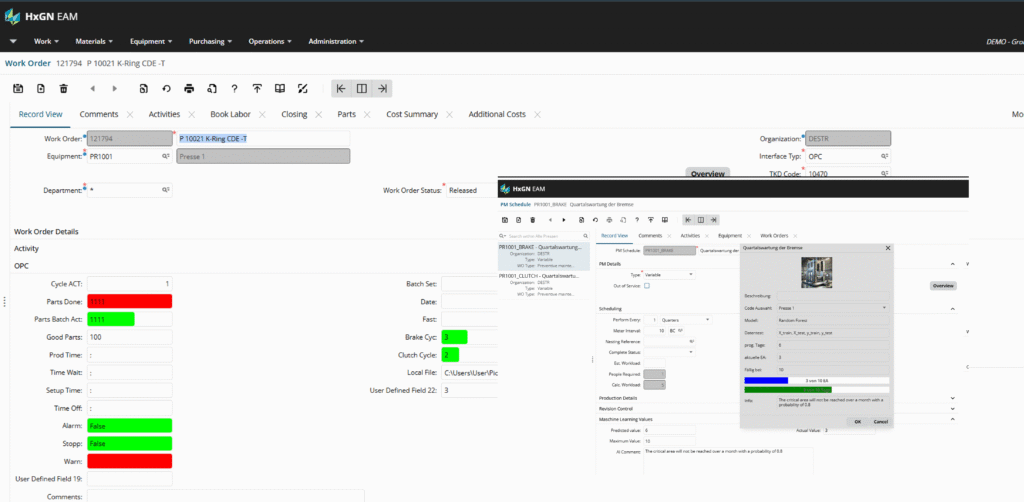
HxGN EAM last-mile improvement
Improve screens, handovers, required fields, approvals and role-specific daily work.
View sprintClarify how work orders move between people, systems and decision points.
Start with auditReview and improve SQL, FlexSQL, JavaScript, HTML and Extensible Framework logic.
View sprintData, reporting and evaluations
The EAM data and reporting angle strengthens the data, reporting, evaluation and operational analysis side of EAM work.
Asset structures, work order history, failure codes, cause codes, meter readings and required fields.
View data serviceRecurring analyses, report logic, data definitions and the practical checks teams need to trust.
View reporting serviceCognos, Birst and Power BI foundations where these tools are already part of the landscape.
View foundationsAssess whether EAM data is reliable enough for assistants, anomaly support or report explanation.
Check readinessInterface reliability
Review request/response logic, mappings, ownership, retries and error paths.
View reliability sprintConnect operational signals only when the EAM context and ownership are clear.
View reliability sprintStrengthen handovers between EAM, ERP, middleware, reporting and Office workflows.
View reliability sprintTypical triggers
Different teams see different numbers and nobody is sure which logic is correct.
Status, approvals, required fields or scripts are hard to explain or change.
Systems exchange data but operations still need manual checks and corrections.
Data quality blocks reliable reporting, planning, dashboards, automation or AI.
SQL, FlexSQL, JavaScript, forms or integration rules have become risky to touch.
Outputs
Symptoms, source systems, owners, logic and operational impact.
Prioritized fixes, report changes, data cleanup, automation or hardening tasks.
Concrete improvements where scope allows, or clear logic ready for implementation.
Data sources, custom logic, interface assumptions, risks and next steps.
Delivery
Define the problem, systems, access, owner, deliverables and acceptance criteria. We agree effort, timing and commercial terms before work starts.
Trace representative records and the current workflow. An audit delivers an issue map and priorities; implementation is scoped separately when the findings call for it.
Implement the agreed change or pilot. Check expected and actual results across normal, difficult and exception cases with the people who use the workflow.
Hand over the change record, test evidence, operating notes and remaining risks. Agree ownership and whether to deploy, harden, integrate or stop.
Describe the workflow, share an example and say what should improve. The first 20-minute conversation is free; we agree the scope before paid work starts.