
Documents and knowledge
Retrieval, extraction, classification and summarization with traceable sources and an option to abstain when evidence is insufficient.
Applied AI & Machine Learning
Test one useful AI/ML use case against a baseline and representative examples. Receive an evaluated pilot, documented failure modes and a decision on integration. Available independently of EAM.
For operational teams, data owners and implementation partners with one defined decision or recurring task. A pilot establishes evidence before a production commitment.
Tiravera
Retrieval, extraction, classification and summarization with traceable sources and an option to abstain when evidence is insufficient.
Anomaly detection, forecasting or prioritization when the available history and labels support a meaningful test against simpler methods.
Suggestions embedded in an operational workflow, with clear approval points, ownership and a usable fallback when the model is uncertain or unavailable.
Tiravera
A defined task, users, data boundary, acceptance and stop criteria, plus a manual or rule-based baseline for comparison.
Representative normal, difficult and exception cases; documented performance, false positives, missed cases, source quality and failure modes. Metrics follow the decision being supported.
A contained implementation, human review rules, operating limitations and a recommendation to integrate, improve the data, continue evaluation or stop. Production rollout is agreed separately.
Delivery
Define the problem, systems, access, owner, deliverables and acceptance criteria. We agree effort, timing and commercial terms before work starts.
Trace representative records and the current workflow. An audit delivers an issue map and priorities; implementation is scoped separately when the findings call for it.
Implement the agreed change or pilot. Check expected and actual results across normal, difficult and exception cases with the people who use the workflow.
Hand over the change record, test evidence, operating notes and remaining risks. Agree ownership and whether to deploy, harden, integrate or stop.
Tiravera
Explain who will use the output, what a useful result means, which sources can be accessed and who can judge difficult cases. If the data is insufficient, the first output is a readiness decision and focused cleanup plan.
Tiravera
Selected material by Lukas Paul Streiff: demonstrations, technical explanations and self-initiated prototypes.
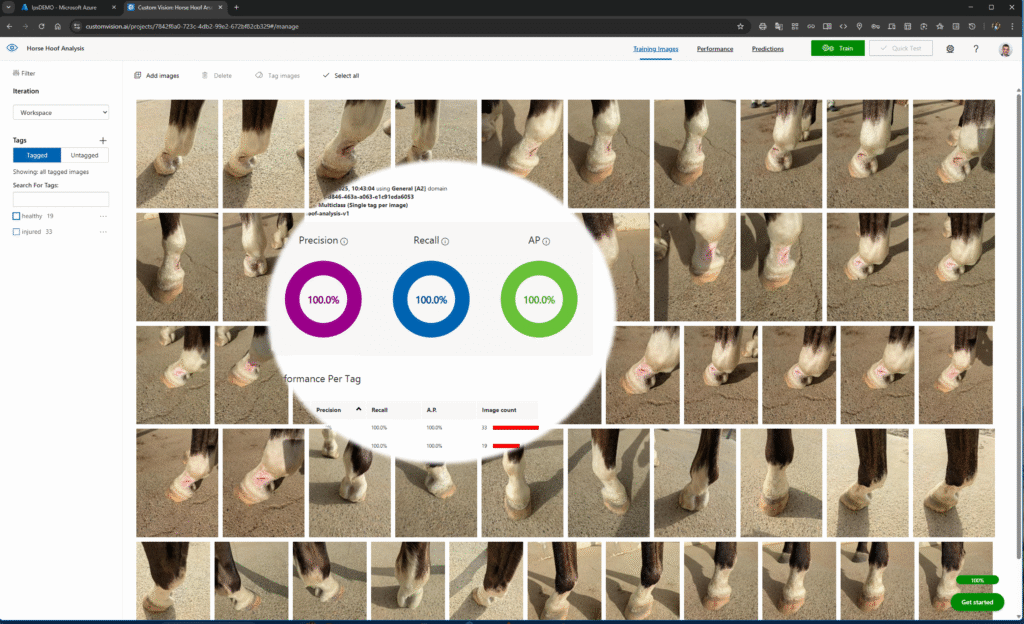
Lukas's self-initiated prototypes explore patterns in water-pressure data and visual anomalies in hoof images. These examples illustrate candidate use cases; customer pilots require their own evaluation.
Explore the prototypesTrace the data meaning, timing, retries and downstream result. Lukas explains why a successful API call is only one part of a reliable operational interface.
Read the approachLukas demonstrates AI executing an EAM configuration through the browser under expert direction. A concrete example of the boutique working method.
Watch the demoDescribe the workflow, share an example and say what should improve. The first 20-minute conversation is free; we agree the scope before paid work starts.